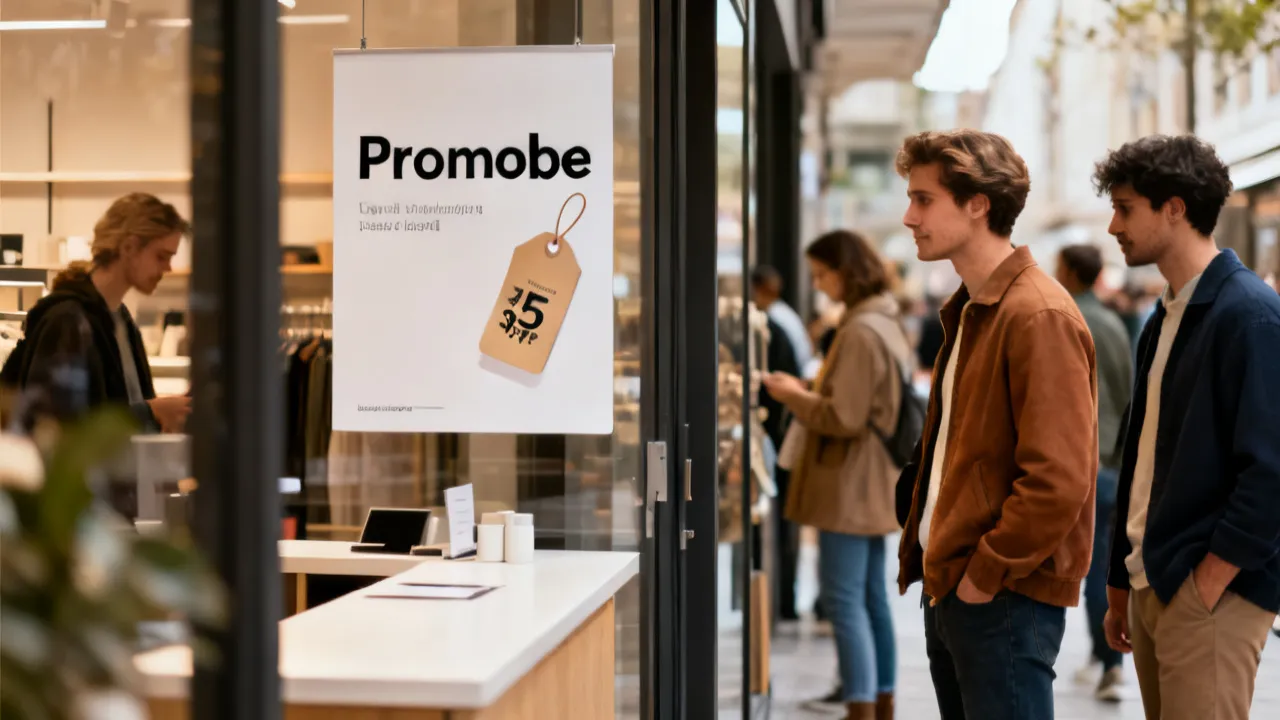
Understanding Promobe in Modern Retail Promotions
This guide explains Promobe as a structured approach to retail promotions, helping shoppers and buyers evaluate offers with clarity. Objectively, “promobe” relates to organized promotional activity in commerce, often tied to supplier-led campaigns and time-bound merchandising. The background covers how such promotions are typically priced, governed, and audited across the supply chain to support value-focused purchasing.

Why Promobe matters for modern shoppers and procurement teams
Promobe is widely understood as a structured promotion framework used in retail to coordinate product visibility, pricing logic, and supplier contributions across a defined period. For shoppers, the key benefit is decision clarity: the offer is not merely “discount-driven,” but packaged with expectations about eligibility, timing, and product availability. In other words, Promobe-style campaigns help customers understand what they are actually buying into—what qualifies, what doesn’t, and when the promotion ends—so they can choose confidently rather than guessing based on a headline percentage.
For procurement and merchandising teams, Promobe-style campaigns are equally valuable because they create governance. Rather than promotions being treated as ad hoc price cuts, a Promobe approach links commercial intent to operational execution: inventory readiness, supplier terms, store or channel rollout, and point-of-sale configuration. That link matters because promotions can underperform not only due to weak marketing, but due to poor operational foundations—unavailable stock, incorrect eligibility rules, or inconsistent execution across locations and channels.
In practice, a Promobe approach often appears during seasonal merchandising cycles, category resets, supplier-supported promotions, new brand launches, or promotional events such as holiday ramps and end-of-season transitions. The commercial value is typically delivered through a combination of pricing rules, promotional mechanics, and operational readiness. In this model, the “offer” is only as reliable as the execution behind it—meaning the customer experience is shaped by whether systems, supply chains, and store teams can deliver the planned promise.
This is also why modern retailers—especially those operating across multiple banners, online marketplaces, and regional distribution footprints—tend to favor structured promotion logic over loosely defined deals. In fragmented retail environments, ungoverned promotions are harder to scale, harder to measure, and harder to defend in the face of customer complaints or audit requirements. Promobe offers a way to standardize the “rules of engagement” so that the shopper’s experience and the procurement team’s expectations converge.
Another reason Promobe matters is that shoppers today have less patience for friction. They are used to real-time product availability, transparent return processes, and dependable checkout totals. When promotions are confusing or fail to apply automatically, shoppers experience immediate distrust. In that sense, Promobe is not just a retail scheduling tool—it is a trust and conversion tool. It aims to ensure that the deal advertised is the deal delivered.
What Promobe generally includes in retail promotion design
While exact mechanics differ by retailer, region, and supplier agreements, Promobe-like campaigns commonly incorporate three core elements: promotional intent and scope, pricing and offer rules, and operational conditions. These are not merely administrative details; they are the factors that determine whether a promotional promise becomes a smooth customer experience or a source of friction, returns, and operational overruns.
To make the idea concrete, consider how promotions often fail. A typical failure pattern is: the marketing message suggests savings, but the items included are narrower than expected; the pricing logic is correct in theory but incorrect at checkout; or the promotion requires eligibility conditions that many shoppers don’t know about. Promobe’s structure aims to reduce these gaps.
In most Promobe-style designs, the campaign includes:
- Promotional intent and scope: Which categories or SKUs are included, which channels carry the promotion (store, online, or both), and what the campaign is meant to achieve (trial, conversion, clearance, brand support, or inventory movement). Scope also clarifies whether the goal is to move volume quickly, protect margin, build customer loyalty, or introduce new assortments.
- Pricing and offer rules: The offer may be built from list price adjustments, bundle logic, threshold pricing, or supplier-funded price support. The critical question from the buyer’s perspective is whether the rules are straightforward and consistently applied at checkout without surprise exclusions. Pricing rules typically specify exactly what triggers the discount and how it is calculated.
- Operational conditions: Stock availability, substitution policies, promotional eligibility (for example, loyalty tiers, minimum spend, or device-specific eligibility), and timelines. Operational conditions ensure that execution aligns with the offer promise—especially in high-demand categories where stock can deplete quickly.
From an industry perspective, these elements create a “contract” between the retailer, suppliers, and customers. When the contract is well-defined and implemented accurately, the promotion feels reliable. When the contract is vague or poorly executed, the customer experience becomes inconsistent—leading to cancellations, returns, and customer support escalations.
Promobe-like campaigns also commonly include measurement requirements: what success metrics look like, how the promotion will be tracked (POS transaction events, basket analysis, loyalty redemption data), and what constitutes compliance (price application accuracy and correct signage). Even though many shoppers never see these details, they influence how promotions are built and maintained.
How pricing typically works in Promobe-style promotions
Even when specific price numbers are not provided in a given overview, the industry pattern remains consistent: pricing within promotions is governed by predefined rules designed to control margin impact and prevent unintended discount stacking. Promobe frameworks often require that retailers and suppliers agree on how the discount is computed, which items qualify, and what funding responsibility applies.
In structured campaigns, stakeholders typically align on the following pricing components:
- Base price references: The starting point from which promotional value is calculated. This base is often defined in internal systems to reduce disputes and ensure consistent computation across channels and regions. The base might be a list price, a previous promotional price, or a contractual reference price.
- Funding responsibility: Whether the supplier supports part of the discount, whether the retailer absorbs the remainder, or whether both share the cost. For procurement teams, funding responsibility is essential because it determines whether the promotion supports strategic margin targets or creates unwanted financial leakage.
- Eligibility constraints: Any exclusions that limit the promotion to specific SKUs, package sizes, regions, or time windows. For example, a promotion may exclude discontinued items, exclude certain flavors or sizes, or restrict distribution to a specific store set.
- Redemption and enforcement: How the offer is applied—automatic at checkout, requiring a coupon code, tied to a bundle, or dependent on an in-app or loyalty enrollment. Enforcement details matter because they control whether the discount is reliably applied for each customer.
These controls align with widely documented retail promotion governance practices. For reliability and consumer trust, reputable retailers also document promotional terms clearly and configure point-of-sale (POS) systems so that advertised pricing rules are reproduced accurately at checkout.
In real-world shopping, the “magic” is not that the discount exists; it is that the discount is predictable. Shoppers often compare the displayed shelf price, the website listing, and the checkout total. When those three align, the promotion feels legitimate. When they don’t, shoppers may abandon the cart, demand adjustments, or return items—creating both revenue loss and operational strain.
Promobe-style governance also helps reduce pricing errors caused by multiple overlapping systems: digital storefronts, local store pricing files, promotional calendar logic, POS discount engines, and sometimes third-party marketplace rules. In mature retail operations, these systems are integrated so that the same promotional rule set triggers the same outcome everywhere.
Another important pricing concept in Promobe-like campaigns is discount stacking protection. Retailers must ensure that a customer does not receive more discount than intended by stacking a promo discount with an unrelated coupon, loyalty reward, or clearance markdown that was not part of the campaign design. Promobe frameworks often incorporate these constraints explicitly so that the financial model remains stable.
Supplier involvement: why it shapes what shoppers can expect
Suppliers are usually central to promotion feasibility. Their contribution may come through marketing co-funding, supply allocation commitments, or price support (where the supplier subsidizes part of the retail price incentive). The practical implication for customers is straightforward: a “great deal” in a structured campaign depends on the supplier’s ability to deliver sufficient stock and maintain quality standards during the promotion window.
From an expert standpoint, supplier involvement affects at least three outcomes:
- Availability: Promoted items can sell through quickly if allocation is tight. Even a well-designed promotion fails to convert if the shopper cannot purchase the promoted item when they reach the store or the website.
- Consistency: Packaging and batch-level consistency matter when promotions encourage bulk buying. If a supplier’s product is substituted with another variant or lot that differs materially, it can lead to perceived bait-and-switch issues or quality complaints.
- Execution accuracy: If supplier terms change or delivery schedules slip, retailers may adjust store signage, online listings, or promotional durations. In Promobe-like systems, such changes should be controlled with formal change processes so that the customer’s experience remains consistent with the advertised offer.
Because of these dependencies, well-run Promobe-style campaigns treat suppliers as operational partners—not merely brand owners delivering marketing requests. The supplier’s performance and responsiveness become part of the promotion’s risk profile. In procurement terms, suppliers are a key variable in the promotion’s service level, and service levels determine real conversion outcomes.
Supplier involvement also influences fairness and customer perception. When customers discover that a promotion is not available as advertised, they often attribute the problem to the retailer’s intention rather than the supplier’s supply constraints. That perception gap is difficult to manage without clear communication. Promobe-style governance can mitigate this by ensuring that the promotion scope and operational conditions reflect actual supply reality.
In addition, supplier co-funding can affect promotion stability. If a promotion is supplier-funded, the retailer’s margin protection may be stronger. Conversely, if the promotion is retailer-funded or partially funded, the retailer might need to cap volumes or adjust eligibility to manage margin erosion. These funding realities can indirectly shape what shoppers see—such as limiting the promotion to specific stores, restricting quantities, or using threshold mechanics to control discount exposure.
Location-specific shopping considerations (using “nearby”)
Retail promotions are often shaped by regional realities—distribution center capabilities, local demand patterns, and store-format differences. When a user considers offers “nearby,” the most common practical questions are: “Is inventory sufficient near me?” and “Will the promotion apply in my store or only in select locations?”
Accordingly, shoppers evaluating Promobe offers near them should pay attention to at least three layers of location specificity:
- Store-level stock variation: Even within the same city or region, shelf availability can differ due to store assortment strategies, replenishment schedules, and prior sales velocity. A store might show “available” online while a different nearby store might have depleted inventory.
- Channel compatibility: Some promotions run in-store only, while others extend online for “nearby” delivery or click-and-collect pickup. Channel compatibility becomes crucial in regions where inventory visibility differs between storefront systems.
- Timing alignment: Early hours may be better for high-demand SKUs, particularly for category-led promotions. Many structured campaigns also include planned restock cycles; knowing the timing can improve success in securing promoted items.
This local lens is a normal feature of retail operations, and it is often more predictive than the headline promotional percentage alone. For example, a “20% off” campaign may be attractive, but if the promoted SKU is not in stock within the relevant nearby stores or if the online listing is temporarily unavailable, the effective value becomes negative once travel time and lost opportunities are considered.
Promobe-style campaigns can still vary by location because eligibility and execution conditions may differ by store cluster. A promotion might be intended for a broad region, but the retailer may choose to narrow the scope based on inventory allocation. This narrowing is not necessarily deceptive; it is usually part of operational governance. However, transparency still matters, and shoppers benefit from clear “where available” messaging.
In mature retail systems, “nearby availability” is computed based on store inventory and fulfillment constraints. If systems are accurate, shoppers can rely on the display. If systems are not synchronized, shoppers may experience discrepancies. Promobe governance helps standardize rule application so that when a promotion is displayed, it is likely to function as expected—provided the shopper reaches the correct eligible channel and location.
Common buyer pitfalls when evaluating Promobe-like deals
Promotions can look attractive at first glance, but experienced buyers typically verify a few fundamentals before committing. This diligence prevents the most common “deal disappointment” scenarios: the item doesn’t qualify, the discount applies only to part of your basket, the effective unit price is higher than expected due to threshold mechanics, or the promotional promise ends early due to stock allocation.
Common pitfalls include:
- Eligibility rules: Confirm whether the discount applies to the exact item, size, or variant in your basket. Many promotions exclude specific pack sizes or variants that appear visually similar.
- Total cost vs. headline savings: Threshold or bundle mechanics can change the effective price. A shopper may see “save $10” but end up paying more if the structure requires additional items or higher spend to unlock the discount.
- Return policy and packaging: Some promoted categories may have stricter return conditions or require original packaging documentation. Promotions can be connected to warranties or service terms that should not be overlooked.
- Stock-driven substitutions: If an item sells out, understand whether substitutions are allowed and whether substitutes retain the same value. Substitution rules can materially change the perceived value of a promoted purchase, especially for electronics, food, or personal care categories.
These checks are especially valuable for high-volume purchases, where small pricing misunderstandings can become large cost differences. For instance, a threshold promo might require you to spend above a certain amount; if you miscalculate and your basket is just below threshold by a small margin, the discount might not apply at all.
Another frequent pitfall is confusing marketing assets with checkout configuration. A website may display a promotional price while the POS at a specific store may show a different price if regional price files are not updated in time. Promobe governance aims to reduce such mismatches, but shoppers still benefit from verifying at checkout.
Buyers also sometimes overlook that promotions can interact with membership programs. If a campaign is loyalty-tier-specific, shoppers who are not enrolled, who have not activated a coupon, or who are shopping under a different account type might not receive the expected discount. Checking eligibility conditions before purchase is therefore part of responsible promotion evaluation.
Industry context: how promotion governance supports consumer trust
In retail, promotions can create skepticism when terms are unclear or when checkout application differs from advertising. Industry governance therefore emphasizes transparency in promotion mechanics, accuracy in POS systems, and consistent enforcement of eligibility rules. While this guide uses the term Promobe generically to describe structured retail promotions, the underlying principles reflect widely used practices across consumer goods and retail categories.
What governance tries to achieve is alignment across the “promotion chain”:
- Marketing alignment: The promotional message must reflect the true scope—what qualifies, how savings are calculated, and where/when the promotion applies.
- System alignment: Store pricing files, online catalog entries, checkout discount engines, and loyalty systems must all apply the same rule set.
- Operational alignment: Inventory allocation, staffing, and store execution (signage, product placement, and customer service scripts) must match the promotional intent and timeline.
Additionally, consumer protection expectations differ by jurisdiction; however, a universal baseline exists: promotional claims should be truthful, and the customer experience should match stated terms. Many regulators focus on misleading pricing practices and require clear disclosure of promotional conditions, especially when promotions reference “was” prices, comparative savings, or time-limited offers.
Promobe-style governance can support compliance because it structures how promotional terms are recorded, approved, and implemented. When a retailer uses structured promotion frameworks, it is easier to audit whether discounts were applied correctly and whether customers received what was promised.
From a procurement and merchandising perspective, governance also supports forecast accuracy. If suppliers and retailers align on expected discount exposure, inventory movement plans, and service levels, the promotion becomes more reliable. Reliability reduces the temptation to “quietly adjust” terms after the campaign is launched—an approach that can damage customer trust.
Ultimately, promotion governance is not just about preventing legal issues; it is about strengthening brand value. Shoppers remember experiences. A promotion that applies cleanly and delivers on the promise reinforces trust. A promotion that fails at checkout undermines trust—even if the shopper ultimately receives a manual adjustment.
Comparison table: how Promobe-style promotions differ by structure and buyer impact
| Promotion structure | Typical buyer impact | What to verify | Top for |
|---|---|---|---|
| Threshold-based pricing | Effective savings depend on cart size | Minimum spend and which items count | Planned stock-ups |
| Bundle offers | Unit price improves only if you buy the full set | Bundle composition and substitute rules | Completing a routine purchase |
| Supplier-supported price support | Discount can be stable across stores if allocation holds | Eligibility by SKU and timing window | Consistent category promotions |
| Limited-time markdown | Strong value, but availability may drop quickly | End date and stock limits | Fast decision shoppers |
Although these structures are common, the shopper experience depends on their details. Two threshold promotions might look similar on a flyer, but one might include certain SKUs in the qualifying threshold while the other excludes them. Two bundles might have the same headline unit savings but differ in substitute policies. Understanding these variations is the difference between a good deal and a disappointing deal.
Step-by-step guide: how to evaluate a Promobe promotion like a professional
Shoppers can approach promotions with the same disciplined thinking used by procurement and merchandising teams. The goal is to evaluate a deal based on its true economic effect—what you pay for the quantity and variants you intend to buy—while also checking operational conditions that influence whether you can actually redeem the offer.
- Identify the exact offer scope: Confirm which products, sizes, and variants are included. Promobe-style campaigns often target specific SKUs rather than entire brand ranges. If the promotion is “select sizes,” verify which sizes qualify rather than assuming the whole range is included.
- Check eligibility conditions: Look for requirements such as loyalty enrollment, minimum spend, or category exclusions. Also confirm whether eligibility is tied to a single transaction or allows multiple transactions across time within the promotion window.
- Calculate the effective unit price: If a bundle or threshold applies, compute the unit cost rather than relying on the headline percentage or amount. For threshold promos, identify whether you must add extra items to meet the threshold and whether those items will be used.
- Verify availability “nearby”: If the promotion is store-specific, confirm local stock. If it is online, check whether delivery/pickup is available within your area and whether the specific SKU is in stock at the fulfillment point serving your region.
- Review return and warranty terms: Promotions should not remove normal consumer rights, but category-specific policies can apply. For electronics, verify warranty registration requirements and ensure the promoted items maintain the same warranty coverage as standard items.
- Confirm at checkout: Ensure the discount is applied to the correct line items. Keep the receipt if the campaign is time-limited, and take a screenshot of the item-level discount if the retailer’s app provides order-level details.
This process turns promotional shopping into a predictable decision. Instead of chasing deals impulsively, you verify the offer’s mechanics, then verify redemption. That is how professionals reduce risk.
For procurement and merchandising leaders reading the same logic from the other side, these steps map to key execution controls: precise scope definitions, verified eligibility conditions, correct promotional pricing rules in systems, accurate local availability, and documented return terms. Even though a shopper does not run these checks in a procurement system, the underlying principles are the same.
Conditions and requirements to consider
Promobe-like campaigns often carry conditions that are easy to overlook if you focus only on the headline offer. These conditions can materially alter your cost, your ability to redeem, and the overall value you receive.
- Time window constraints: Many Promobe-like campaigns are limited-time. Plan purchases to avoid expiry surprises. Also confirm whether the promotion ends at midnight, at store closing time, or at a specific timestamp in the online checkout system.
- Inventory availability: Promotions may be advertised broadly but executed with allocated stock. Near “nearby” locations, the promoted SKU may sell out earlier than expected, especially if the promotion is unusually popular.
- SKU-specific eligibility: Even within the same brand, only designated items may qualify. Verify SKU-level naming and compare the variant (flavor, size, model number, or pack configuration) rather than relying on brand recognition alone.
- Channel limitations: Some offers apply only in-store or only online. Confirm the channel where you intend to buy. If you plan to pick up online, ensure that the pickup inventory qualifies and that the promotion is applied to pickup orders.
- System accuracy: If pricing rules are complex, verify discount application at checkout to avoid mismatches. Complexity can come from bundle rules, multiple discount triggers, loyalty eligibility, or supplier-funded allocations.
Another subtle condition relates to substitution. Some retailers use substitution to fulfill inventory when the exact SKU is not available for delivery. Substitution can be acceptable if it preserves value and key features, but it can reduce value if the substitute item is a different specification. Understanding substitution terms before purchase is therefore important for shoppers, and it is also important for procurement teams to control customer satisfaction risk.
Promobe-style governance often includes rules about substitutions and replacements, but shoppers should still read the terms because substitution behavior can depend on the retailer’s fulfillment configuration and the customer’s preferences (for example, “substitute allowed” vs. “no substitutions”).
Supplier-backed campaigns vs. retailer-only promotions
In many retail ecosystems, Promobe-style initiatives can be either supplier-backed or retailer-driven. The difference is meaningful because it changes how stable the discount is, how predictable inventory is, and how the promotion is financed and governed.
Promotions might be categorized as:
- Supplier-backed: Often includes marketing coordination and may feature more standardized promo mechanics across stores (assuming allocation supports it). Supplier-backed campaigns are commonly designed to move specific products or promote category penetration.
- Retailer-only: Typically emphasizes internal pricing strategy and can vary more by store or region. Retailer-only promotions may also be used to react to competitor moves, manage inventory aging, or adjust category mix.
For shoppers, supplier-backed promotions can sometimes feel more “stable,” particularly when multiple stores follow the same promotional terms and suppliers fulfill allocation reliably. However, stability still depends on logistics and inventory flow.
For decision-makers, retailer-only promotions may be easier to adjust quickly—though that can reduce predictability for customers if terms change abruptly. For example, retailers might alter promo duration or limit eligibility when stock levels change. In well-governed Promobe-style processes, such changes should be communicated clearly to avoid customer confusion.
From a procurement standpoint, supplier-backed campaigns usually shift part of the cost and sometimes part of the execution responsibility. Procurement teams must evaluate supplier performance and the credibility of supply commitments. If supplier-backed campaigns repeatedly fail due to allocation constraints, the retailer may need to renegotiate supplier terms, adjust scope, or redesign future promotions.
Expert recommendations for maximizing value without compromising quality
As a retail and merchandising practice, the top-value approach is not simply chasing the lowest price; it is balancing discount with product fit and reliable performance. A promotion can be an excellent deal or a costly mistake depending on whether the product meets your needs, whether you can use it before it expires (for consumables), and whether the promotion’s mechanics align with how you shop.
Use this checklist to maximize value:
- Match the promotion to your actual need: A discounted item you do not use has a hidden cost. The true cost includes storage, waste (especially for consumables), and the opportunity cost of not buying a product you truly need.
- Prioritize correct sizing and specifications: Bundles may tempt shoppers into purchasing mismatched variants. Confirm size, compatibility, model numbers, and ingredient or feature requirements (where relevant).
- Compare against your previous purchase: If you regularly buy the same product, compute whether the promoted unit price is genuinely better than your usual price trend. This is especially relevant when retailers run frequent promotions that can make “savings” look larger than they are.
- Consider total consumption horizon: Especially for consumables, buying during a structured campaign may reduce per-unit costs, but only if storage and usage align. Check expiration dates and storage requirements to avoid losing value through spoilage or degradation.
Expert shoppers also consider how promotions fit into their larger purchasing behavior. For example:
- If you already plan to purchase related items, bundles can be efficient because you would buy the items anyway.
- If a threshold promotion encourages buying extra items you wouldn’t otherwise need, your effective savings may be reduced or eliminated.
- If limited-time markdown is based on clearing aging inventory, ensure the product is still within your acceptable quality window—especially for sensitive categories like dairy, cosmetics, or seasonal goods.
For procurement teams and category managers, the parallel is that promotion design should reflect consumer use patterns. If the promotion drives behavior that creates returns or waste, it may damage brand equity and operational cost—even if the initial revenue looks positive.
Sources and reference standards (objective and verifiable)
This article focuses on concept and evaluation methods rather than on a specific retailer’s campaign terms. The underlying principles—promotion transparency, accurate pricing application, and consumer-rights expectations—are consistent with general retail governance practices. For background on consumer protection and unfair or misleading pricing practices, readers may consult applicable national consumer protection authorities and guidance related to misleading pricing and promotional disclosures.
For industry performance context, readers can review annual retail and consumer spending research from established organizations such as OECD reports on consumer trends. Readers may also consult major accounting, consulting, and market research publications that analyze retail promotional behavior with documented methodology. While the specific term “Promobe” may not appear as a universal industry standard in public documentation, the governance themes described—pricing rule clarity, operational execution, and compliance—are widely discussed across retail and consumer protection materials.
Note: If you want, share your country or the specific retailer you mean by “Promobe,” and I can tailor the conditions and compliance considerations more precisely using jurisdiction-appropriate public guidance.
FAQs
What does Promobe mean in retail promotions?
Promobe is commonly used as shorthand for a structured promotional approach in retail—coordinating eligibility, pricing logic, supplier support (when applicable), and execution timing to create a reliable offer experience.
How do I confirm whether a Promobe deal applies to my cart?
Verify the eligible SKUs and conditions (such as minimum spend or bundle requirements), then check that the discount is correctly applied at checkout. Retain your receipt during the promotional period.
Are Promobe-style promotions the same in every store “nearby”?
Not always. Store-level inventory allocation, channel rules (in-store vs. online), and local assortment can cause differences. Always confirm local availability and whether the offer runs in your intended channel.
Do suppliers control the final discount in Promobe campaigns?
Often they influence pricing through price support, co-funding, or allocation commitments. However, the final customer price and eligibility are ultimately determined by the retailer’s promotion setup and the agreed commercial terms.
What’s the top way to compare a Promobe deal to regular pricing?
Calculate effective unit pricing based on the promotion structure (threshold, bundle, or markdown), and compare it to the price you would otherwise pay for the same variant and quantity. This avoids overestimating savings from headline discounts alone.
Can a Promobe promotion end earlier than advertised?
Yes, in some cases. If inventory runs low or allocation limits are reached, retailers may adjust availability or end the promotion for certain SKUs. That’s why checking “nearby” availability and the offer status is important.
What should I do if the discount doesn’t apply correctly?
Bring the product and receipt details to customer service and reference the promotional terms. Ensure the checkout line items match the eligible SKU list and that conditions (like minimum spend) were satisfied.
Does Promobe always involve discounting?
Often it includes price incentives, but structured promotions can also rely on bundle value, threshold mechanics, or supplier-supported pricing strategies. The key is the presence of defined eligibility and pricing rules, not the discount alone.
-
1

Maximizing Benefits of Solar Panels: Costs and Energy Efficiency
-
2
Maximizing Your Purchase: Ram 1500 Deals and Towing Capacity
-
3
Affordable Stair Lifts for Seniors: A Comprehensive Guide
-
4
The Ultimate Guide to Lab-Grown Diamonds: Ethical & Cost-Effective Choices
-
5
The Ultimate Guide to Weight Loss Injections, Metabolism, and Appetite Suppression