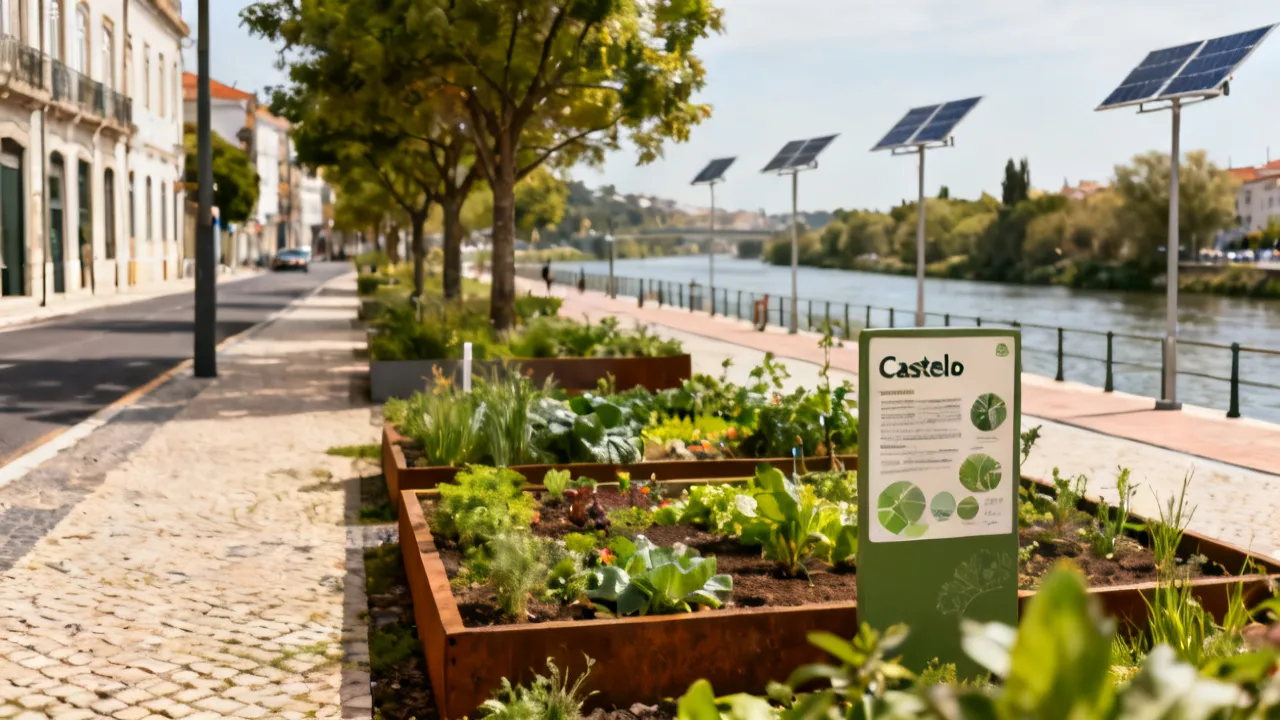
Ambientalist Castelo Guide for Responsible Urban Living
This guide explains how Ambientalist Castelo principles support more responsible urban living through practical choices in materials, maintenance, and community engagement. It defines the keyword context objectively, outlining how “ambientalismo” connects everyday decisions to environmental outcomes, and why design, suppliers, and good stewardship matter for durable, lower-impact results.

Ambientalist Castelo: the very important choices first
Ambientalist Castelo is widely understood as a practical, decision-oriented approach to environmental responsibility—where everyday urban choices, product selection, and stewardship are treated as interconnected. In this framing, sustainability is not a single moment of “buying something greener,” nor a slogan that can substitute for performance. Instead, it is a way of structuring choices so that what you do today continues to work tomorrow, across installation, use, maintenance, and end-of-life handling. If you’re evaluating solutions inspired by this idea, prioritize three fundamentals at the outset: (1) environmental performance you can verify (materials, durability, and end-of-life handling), (2) supplier accountability and documentation, and (3) a maintenance plan that preserves functionality over time. Done this way, your decisions tend to become more resilient to changing regulations and costs, rather than relying on short-term “green” appearance.
One reason this approach is powerful is that it forces an uncomfortable but necessary shift in thinking. Many people treat environmental responsibility as a feature—something you “add” to a product or service at purchase time. Ambientalist Castelo treats environmental responsibility as a system property. That means you cannot judge a decision only by what it looks like on the label or in promotional material. You must judge it by how it behaves throughout its lifecycle. When you structure your evaluation around evidence, continuity of supplier support, and realistic maintenance, you reduce the risk that an apparently responsible purchase turns into waste, premature replacement, or hidden harm.
It also helps to think about how urban environments amplify small problems. A minor material issue may be tolerable in a single household, but in a building, in a facility with repeated operations, or in a neighborhood with shared waste handling and maintenance arrangements, the consequences multiply. A maintenance plan that is unrealistic may lead to deferred upkeep, faster wear, and earlier replacement. In turn, that increases embodied impacts (materials and manufacturing) and operational impacts (energy used due to inefficiency, staff time spent on repeated repairs). Ambientalist Castelo-style decision-making is designed to prevent those multipliers by making “the very important choices first” and by insisting on a coherent workflow.
Why “ambientalismo” matters in real-world decisions
The term “ambientalismo” commonly refers to a worldview and set of practices that aim to reduce environmental harm and protect ecosystems. In everyday usage, it may appear as a broad call for action: plant trees, reduce waste, conserve energy, and reduce pollution. But if you translate ambientalismo into procurement and built-environment decisions, it becomes more specific. It turns into choices about materials, product lifespan, emissions from operation, chemical safety, and end-of-life options. This is where “Ambientalist Castelo” acts as a shorthand: it suggests a practical orientation toward responsible living within built environments—spaces shaped by design, procurement, and routine care.
Importantly, this is not only about aesthetics or claims; it is about selecting options that reduce resource intensity, avoid problematic substances, and support responsible disposal or recycling at the end of use. That means your decisions must include not only the front-end purchase and installation but also the back-end realities: can the product be maintained with available parts? Will it degrade in ways that are difficult or expensive to repair? Are there disposal or take-back pathways? If the answer is uncertain, you haven’t truly reduced environmental risk—you’ve just postponed it.
Another reason ambientalismo matters is that sustainability is often affected by human behavior. If a product requires frequent filter changes that occupants find inconvenient, the product’s performance may degrade. That degradation can lead to increased energy consumption (e.g., more heating or cooling to compensate), increased wear, and ultimately earlier replacement. Ambientalist Castelo, when applied responsibly, acknowledges that behavior and maintenance are part of environmental outcomes.
Supplier signals: what you should demand before buying
From an industry expert perspective, the most reliable “green” pathway is the one that can be audited. If Ambientalist Castelo-style decisions are going to remain defensible years after installation, you need supplier documentation that supports what you chose. For products, systems, or service packages connected to Ambientalist Castelo-style decision-making, ask for verifiable documentation rather than broad marketing statements. Typical due-diligence items include material specifications, safety data where applicable, lifecycle or environmental reporting when available, and clear guidance on installation and maintenance. Even when pricing information is unclear upfront, supplier transparency often correlates with fewer downstream surprises—such as accelerated wear, incompatible components, or wasteful replacements.
Supplier accountability is not just about whether a company says the right things. It’s about whether you can confirm those statements with evidence and whether the supplier can help you implement them correctly. For example, a building-integrated system may claim “low-impact materials,” but without material identifiers, you cannot verify what is inside. Without installation constraints, you cannot be sure the system is installed as intended. Without maintenance guidance, you cannot know how the system will age in real conditions.
When you request documentation, you are also effectively asking the supplier to think like a responsible partner rather than a one-time seller. A strong supplier will often provide: (a) technical datasheets with material composition information where relevant, (b) product-specific care instructions, (c) recommended service intervals, (d) compatibility notes for installers, (e) warranties and what they cover, and (f) end-of-life or recycling guidance. For certain categories, you may also request conformity declarations, chemical restrictions compliance (where relevant), and data that supports safety and handling during maintenance.
It’s also useful to request documentation that shows continuity. Some suppliers disappear after a project is complete, or the product line changes such that parts become unavailable. Ambientalist Castelo thinking should include the question: “Will we be able to maintain this in five, ten, or fifteen years?” Supplier documentation should therefore include parts availability information or at least a plan for replacement components.
Price considerations without speculation
Because your request references “price information” yet provides no specific numbers, it’s better to treat pricing as a comparative variable rather than an absolute. In sustainable procurement, the very actionable principle is total cost of ownership (TCO): the sum of purchase price plus installation effort, maintenance frequency, expected service life, and end-of-life costs. When evaluating Ambientalist Castelo-inspired choices, request a like-for-like comparison that includes service intervals, replacement triggers, and disposal or recycling pathways. This approach avoids unverified pricing claims while still helping you budget intelligently.
TCO is often misunderstood as merely adding maintenance costs to purchase costs. But in Ambientalist Castelo-style decision-making, TCO also includes “risk costs.” For example, if one option requires specialized maintenance that is difficult to schedule locally, you may incur downtime or higher service fees. If one option has uncertain part availability, it may force replacement of the entire system rather than a repair. If one option degrades faster because it is installed differently or requires more frequent cleaning, the operational costs rise. TCO therefore becomes a structured way to compare environmental choices fairly.
To implement TCO effectively, avoid fuzzy assumptions. Ask suppliers to specify expected lifespan under defined conditions, and verify those conditions. If a product’s durability claim is based on ideal climate conditions, it may not apply in your region. If an HVAC-related product depends on maintenance frequency that occupants cannot realistically follow, the stated service life may not be achievable. Ambientalist Castelo thinking emphasizes coherence between product requirements and the real routines of a building or neighborhood.
Where price varies, do not automatically prefer the cheapest. Instead, ensure that each proposal includes the same scope. Compare installation labor requirements and constraints, the required accessories or consumables, warranty conditions, and the costs of servicing over a consistent time horizon. If you compare a low-cost solution that requires frequent replacement with a higher-cost solution that lasts longer and can be repaired, you may find the environmentally superior option is also more cost-effective over time.
Local context and “ambient” culture: how decisions shape daily life
Urban sustainability gains traction when it aligns with local habits and norms. Even without a specific city named in your keywords, the practical “nearby” framing matters: people adopt sustainable routines more easily when solutions fit the rhythms of their neighborhood—climate patterns, commuting behavior, waste infrastructure, and maintenance culture. In many communities, environmental stewardship succeeds not because of a single purchase, but because residents and businesses can keep systems functioning with reasonable effort.
Local context includes more than climate. It includes: (1) whether there are qualified installers who can install according to the product specification, (2) whether replacement parts are accessible, (3) whether waste sorting systems exist that support recycling pathways, and (4) whether local regulations require certain documentation or disposal methods. If these conditions are missing, then your best sustainability intentions may fail in practice.
For example, a product may have a theoretical recycling pathway in some countries, but if the local waste stream does not separate materials accordingly, recycling becomes unlikely. Or a maintenance-intensive product may work in a facility with professional staff and regular service schedules, but not in a residential building where maintenance is irregular. Ambientalist Castelo-style decision-making addresses this by insisting on maintenance plans that match the real capacity of the owner and the local service environment.
Local “ambient culture” is also about information flow. If tenants or staff do not understand how to maintain a system, the system’s performance will degrade. Therefore, documentation should not be only technical for the supplier; it should be usable for the people who will actually operate the system. Sometimes the most sustainable choice is not the product with the most advanced technology, but the product with instructions and maintenance requirements that people can follow without friction.
In a neighborhood setting, community practices also matter. If residents share information about repair and maintenance, systems last longer and fewer replacements occur. If waste disposal practices are consistent and reliable, end-of-life pathways are more effective. Ambientalist Castelo thinking encourages you to look beyond your immediate purchase and consider how the solution will be managed by the people and systems surrounding you.
Risk management: where green intentions commonly fail
In procurement and design, environmental intention can fail when durability is overestimated, when materials are chosen for appearance rather than performance, or when suppliers cannot support the installation and aftercare required for longevity. A common industry pattern is that low-impact outcomes are achievable, but only when the full workflow—selection, installation, operation, and maintenance—is coherent. Ambientalist Castelo, interpreted responsibly, points toward that coherence.
Risk management is essential because sustainability claims are often based on assumptions. Those assumptions might include: proper installation, correct maintenance intervals, use within recommended ranges, availability of spare parts, and the existence of recycling routes. When any assumption fails, environmental benefits can evaporate and can even reverse. For example, a material that is “low-impact” in manufacturing might still lead to high environmental damage if it fails early, causing repeated replacement and increased waste.
There are also risks associated with documentation. Some suppliers provide vague sustainability claims without data, making it impossible to verify performance. Others provide documentation that applies to a different product version or a different region. Still others provide certifications that are not directly connected to the exact product you plan to purchase. Ambientalist Castelo emphasizes verification and traceability—so you don’t buy a label, you buy a proven system performance.
Another risk is operational misfit. A highly efficient product may require specific operating conditions. If those conditions are not managed—through control settings, sensor calibration, filtration regimes, or user behavior—the product may underperform. Underperformance might lead to increased energy consumption and more frequent cleaning or repair. This becomes an environmental risk because the operational emissions over time can outweigh the embodied benefits of the original design.
Risk management also includes compliance risks. Regulations change over time: product restrictions, chemical bans, disposal requirements, and reporting requirements evolve. A decision that relies solely on current marketing claims may not remain compliant later. But a decision anchored in verifiable documentation, known maintenance routines, and transparent end-of-life pathways is more resilient. Ambientalist Castelo’s “very important choices first” approach helps you build resilience by securing the fundamentals upfront.
Step-by-step guide: applying Ambientalist Castelo principles
Below is a practical sequence you can follow whether you’re a homeowner, facility manager, or purchasing coordinator. The goal is to help you make decisions that remain defensible after installation and through good use. Use it as a structured checklist: each step builds on the previous one, and skipping a step often creates hidden risks that appear later as cost spikes or sustainability failures.
In addition to the steps listed, consider documenting your decision process. When you request documentation, save it. When you compare proposals, record the assumptions. When you define a maintenance plan, assign responsibility. This makes it easier to defend the decision to regulators, auditors, internal stakeholders, or future building managers.
- Clarify the outcome you want: reduce environmental load, improve comfort, support indoor air quality, lower operational waste, or enable responsible end-of-life handling. Be specific about which “environmental load” you mean—materials, energy use, water consumption, waste generation, or emissions associated with operations.
- Write a specification in plain terms: define performance needs (durability, compatibility, required maintenance, and expected service life). Avoid vague “eco” preferences without measurable implications. If you need improved indoor air quality, specify air-change rates, filtration standards, and maintenance responsibilities. If you need durability, specify expected lifespan and environmental conditions.
- Audit supplier documentation: request material specs, installation requirements, safety guidance, and any environmental reporting that can be substantiated. Ensure the documentation applies to the exact product and configuration you are buying.
- Compare like-for-like proposals: evaluate systems that match your performance and maintenance assumptions. If one option requires more frequent replacements, it may be less sustainable even if it looks “greener” initially.
- Check installation and aftercare feasibility: ensure the supplier can support proper installation and provide maintenance instructions that are realistic for your situation. Confirm that installers can meet the required installation standard.
- Plan for maintenance from day one: durability depends on upkeep. Build a maintenance calendar and assign ownership for inspections or servicing. Decide whether you will handle maintenance internally or contract it out.
- Confirm end-of-life pathways: ask how materials are handled at disposal, whether parts can be refurbished, and whether recycling routes exist. Clarify whether take-back programs exist and what conditions apply.
Conditions and requirements (comparison table)
Use the table below to compare approaches aligned with Ambientalist Castelo thinking. It is designed to keep your evaluation objective and to surface practical requirements you may otherwise overlook. A useful habit is to treat the “what to verify” column as non-negotiable prompts. If a proposal cannot satisfy the verification needs, it is not simply “different”—it is missing the evidence required for a resilient decision.
| Evaluation Item | Ambientalist Castelo-aligned approach | What to verify (non-exaggerated) | Typical requirement |
|---|---|---|---|
| Documentation | Supplier provides specifications and responsible-use guidance | Material identifiers, safety/handling notes (where relevant), installation and care instructions | Written product or system documentation |
| Durability & service life | Focus on expected lifespan and maintenance needs | Replacement intervals, wear indicators, service triggers | Maintenance plan and responsibility assignment |
| Lifecycle perspective | Assess total cost of ownership and end-of-life pathway | Disposal/recycling guidance and refurbishment options | Clear end-of-life procedures |
| Compatibility | Components designed to work together to reduce waste | System compatibility and installation constraints | Installer capability and adherence to specs |
| Environmental claims discipline | Claims supported by verifiable information | Certifications or reporting where available; avoid unverifiable “green” marketing | Procurement policy requiring evidence |
| Operational performance | Efficiency and quality under real operating conditions | Performance specs, required operating ranges, and maintenance effects on performance | Operational manual and performance assumptions |
| Waste minimization during use | Consumables and cleaning requirements are realistic | Filter/consumable replacement schedule and disposal requirements | Consumables list and disposal instructions |
How to evaluate “ambient” sustainability outcomes
Even when the goal is broad—“make the environment better”—responsible decision-making benefits from narrowing down measurable effects. Within the spirit of Ambientalist Castelo, consider outcomes such as reduced material waste, fewer replacements, improved operational efficiency, and lower contamination risk during use. If you’re dealing with built environments, indoor comfort and ventilation effectiveness often matter because occupant well-being influences maintenance habits and system longevity.
It can be helpful to translate “ambient” outcomes into a small set of indicators. The indicators do not have to be complicated; they just need to be connected to real processes. Examples include:
- Replacement frequency: How often will you need to replace consumable components, and how does that compare across options?
- Maintenance burden: Is maintenance easy to schedule, and can it be done with available local service capacity?
- Operational efficiency: Does the system maintain performance when maintained according to the recommended intervals?
- Waste quality: Does end-of-life disposal risk contamination (making recycling unlikely) or create hazardous waste streams?
- User compliance likelihood: Are instructions understandable and frictionless enough to be followed consistently?
When you evaluate built-environment solutions, indoor air quality is an important “ambient” component. If a system’s filtration or ventilation capabilities depend on frequent cleaning or filter replacements, then low compliance creates environmental and health risk. This is an example where sustainability and human factors overlap. The more a system depends on perfectly executed maintenance, the more you should scrutinize the feasibility of that maintenance plan.
In water-related systems, the “ambient” outcomes might include reduced leaks, reduced waste water through efficient operation, and minimized contamination risk in disposal. For energy systems, the outcomes might include reduced electricity or gas consumption over the lifecycle. For materials, the outcomes might include recyclability, repairability, and avoidance of hazardous substances that complicate disposal.
A key Ambientalist Castelo principle is to treat performance over time as part of sustainability. If a product loses performance because it cannot be maintained easily, it might generate more waste or energy use than a simpler product with better maintainability. Therefore, evaluation should consider how the system ages and how maintenance affects its performance.
Expert considerations for suppliers and procurement teams
From a procurement and industry-analysis standpoint, the strongest sustainability strategies are structured around procurement governance. That means building decision criteria into purchase orders and requiring evidence-based submissions. For Ambientalist Castelo-inspired procurement, your evaluation should include:
In practice, procurement governance means you set criteria before you start requesting bids. Otherwise, suppliers will respond with generic claims rather than targeted compliance. When criteria are defined early, you can ask for documents that match them, compare proposals fairly, and reduce the administrative burden later.
- Requirement traceability: every preference should link back to a requirement (durability, safety, compatibility, or end-of-life handling). If you can’t trace a preference back to a measurable requirement, it becomes a marketing bias rather than a sustainability improvement.
- Comparable scope: avoid comparing a partial package against a full solution. In sustainability decisions, partial scope comparisons can be misleading because the “missing pieces” often include consumables, installation requirements, or disposal costs.
- Document retention: keep specs and care manuals for maintenance verification. A sustainable purchase without documentation is difficult to sustain.
- Supplier performance continuity: ensure the supplier or installer can remain available for follow-up issues. If the supplier cannot support warranty claims or replacement parts, you may be forced into earlier replacement and more waste.
- Verification mechanisms: define how you will verify claims (e.g., by checking material certificates, installation compliance, or end-of-life take-back terms). Avoid “trust me” procurement.
- Installation competency: require installer qualifications where relevant. A system installed incorrectly may fail early, undermining environmental and cost assumptions.
- Maintenance accountability: define who owns maintenance tasks and how performance will be checked. Without accountability, maintenance plans remain theoretical.
Procurement teams should also consider how they communicate with internal stakeholders. For example, if facilities teams are expected to maintain a new system, they need to understand what will be required. If maintenance teams are not engaged early, they may later reject the solution or treat maintenance as optional. That would undermine both sustainability and operational reliability.
When evaluating suppliers, it can help to request a “responsibility map.” This map answers: what does the supplier guarantee during installation? What does the supplier recommend for operation? What is the supplier’s responsibility for parts availability? What is the supplier’s responsibility for end-of-life guidance? Ambientalist Castelo thinking benefits from clarity because unclear responsibility creates gaps that often become waste or safety risks.
Reliable sources you can consult
Because your request asks for trustworthy guidance without speculative claims, it is useful to rely on established frameworks and official research when available. For lifecycle and procurement thinking, credible baselines include:
- ISO 14040/14044: principles and requirements for lifecycle assessment (LCA) methodology. If you’re comparing options and need an evidence framework, these standards provide the structure for interpreting lifecycle information.
- IPCC reports: authoritative assessments on climate science and the importance of emissions-related decision-making. These can inform the broader “why” of sustainability, especially around climate impacts.
- OECD guidance and sustainability reporting principles: frameworks that emphasize transparency and evidence. These can help you interpret sustainability claims and require better disclosure.
- Government and standards bodies: for local environmental requirements and product disclosure rules. Local context often determines what documentation is mandatory and what disposal pathways exist.
Depending on your product or service category, additional sources can be relevant. For instance, energy-efficiency procurement may reference recognized labeling or testing standards. Indoor air quality choices may be informed by standards related to ventilation and filtration performance. Waste and chemical safety decisions may depend on regulations about hazardous substances and recycling categories. The Ambientalist Castelo approach does not require you to become a technical expert; it requires you to demand documentation and align decisions with verifiable frameworks.
If you want, tell me your country or the type of product/service you mean by “Ambientalist Castelo,” and I can suggest the very relevant official references for that domain.
FAQs
1) What does “Ambientalist Castelo” mean in practical terms?
Practically, it refers to making everyday decisions—especially related to materials, built environments, procurement, and maintenance—in a way that reduces environmental harm. The emphasis is on coherence across the lifecycle, not only on appearance or marketing. It also implies that sustainability should be maintainable in real conditions, with documentation, responsibilities, and end-of-life pathways considered from the beginning.
2) How do I compare options when price varies?
Use total cost of ownership (TCO): purchase price plus installation, maintenance frequency, expected service life, and end-of-life costs. Request like-for-like comparisons from suppliers so the scope and assumptions match. If proposals differ in maintenance requirements, parts availability, or disposal assumptions, the comparison must reflect those differences rather than ignoring them.
3) What evidence should I request from suppliers?
Ask for product/system specifications, installation and maintenance instructions, and any environmental reporting that can be substantiated. Where relevant, request safety/handling documentation and details about end-of-life or recycling pathways. In Ambientalist Castelo thinking, “evidence” means documentation you can check and documentation that applies to the exact product configuration you’re purchasing.
4) Are certifications always enough?
Certifications can be helpful, but they should be treated as one input among others. You still need to confirm durability, compatibility, installation feasibility, and whether the certification aligns with the specific product and lifecycle stage you care about. A certification without evidence of real-world maintenance feasibility may not deliver the promised benefits.
5) What is the biggest mistake people make with sustainability purchases?
A common mistake is focusing on an upfront “eco” label while underestimating maintenance needs or replacing components sooner than expected. Ambientalist Castelo-style decisions emphasize the full workflow that sustains performance over time. Another frequent mistake is buying without preserving documentation—making later verification and maintenance harder.
6) Does local infrastructure affect sustainability outcomes?
Yes. Recycling routes, waste sorting systems, climate conditions, and local maintenance culture all shape whether an environmentally oriented choice delivers real-world benefits. Planning for “nearby” constraints is often more important than chasing broad claims. Even the best theoretical end-of-life option may not work if local waste processing cannot handle the material category.
7) Where should I start if I’m new to this?
Start with outcome definition and a simple specification. Then request documentation from suppliers and compare TCO using consistent scopes. Finally, set a maintenance plan that preserves performance through the expected service life. If you’re unsure how to define a specification, begin by listing the tasks needed after installation (maintenance, cleaning, part replacement) and then work backwards to the performance requirements.
8) How do I prevent “greenwashing” in proposals?
Require documentation that ties claims to the specific product. Ask for verifiable metrics, material disclosures when relevant, and details on end-of-life. Compare proposals using the same assumptions for service intervals and disposal costs. If a supplier cannot explain how a claim will be realized in your context, treat it as unverified.
9) What if the supplier cannot provide end-of-life pathways?
That’s a risk signal. In Ambientalist Castelo thinking, uncertainty about end-of-life handling undermines the lifecycle perspective. You can ask alternative questions: Are there take-back programs? Are materials identified so recycling routes are possible? If no end-of-life plan exists, consider whether the product is repairable or whether components can be separated for recycling. If the answer remains uncertain, weigh the risk in your TCO and sustainability assessment.
10) How long should I plan for when comparing lifecycle impacts?
Plan according to the expected service life and maintenance cycle of the product system. A TCO horizon of three to five years may work for some consumables, while built-environment systems may require a much longer view. If you have no guidance, request a lifecycle estimate tied to recommended maintenance intervals and expected wear patterns.
Conclusion: turning intentions into durable environmental performance
Ambientalist Castelo-inspired thinking becomes effective when it is translated into concrete requirements: verify supplier documentation, compare total cost of ownership rather than only purchase price, and design a maintenance-and-end-of-life pathway that supports longevity. This objective approach helps you make decisions that hold up under real conditions—an essential step for responsible urban living and good environmental stewardship.
At its core, Ambientalist Castelo encourages a disciplined shift from “green intentions” to “durable environmental performance.” That shift is achieved by choosing what matters first: evidence of environmental performance, accountability from suppliers, and a plan for maintenance that keeps systems functional long enough for the promised benefits to be realized. When those fundamentals are in place, the decision is not only sustainable in theory—it is sustainable in practice.