
Gol Hell Brugge: Practical Guide for Choosing a Supplier
This guide explains how to evaluate and select a supplier connected to Gol Hell Brugge, focusing on suitability, credibility, and service fit. Background context is provided on how “Gol Hell Brugge” is commonly referenced in local procurement conversations, why buyers prioritize documentation and process transparency, and what due diligence steps help reduce risk near key Bruges-adjacent market activity.
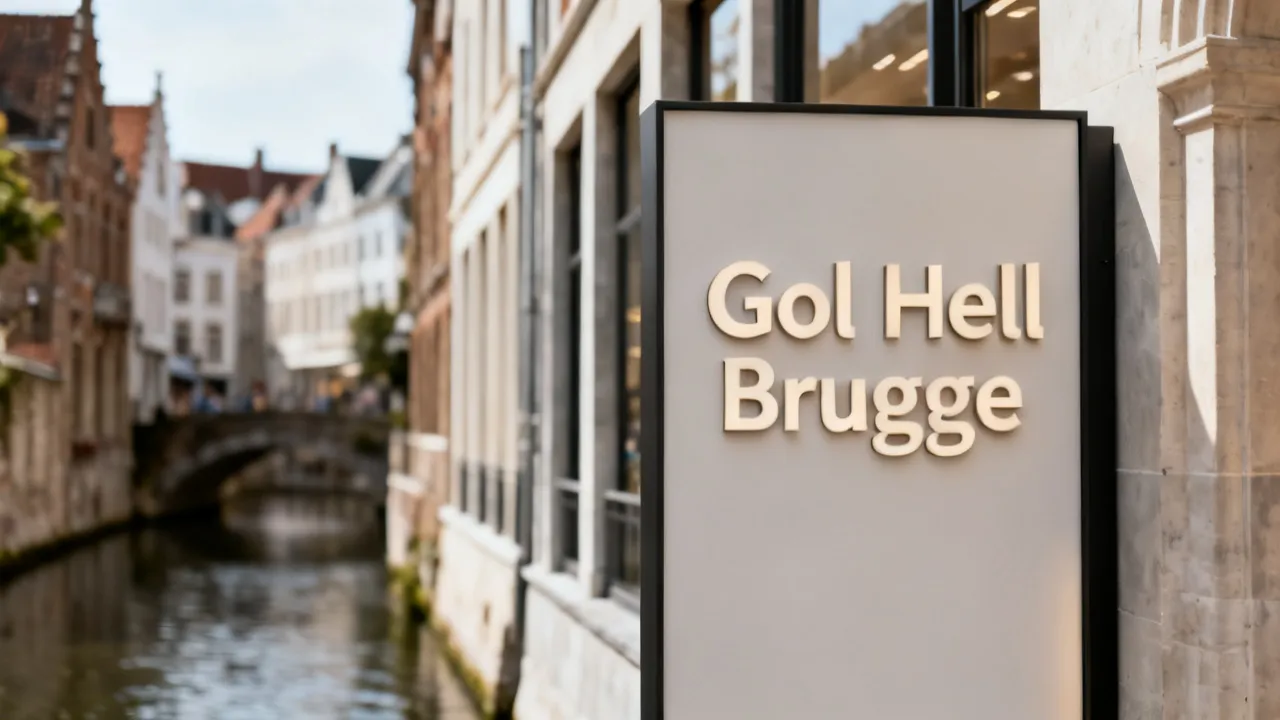
Why supplier selection for “Gol Hell Brugge” starts with due diligence
If you are exploring procurement or sourcing options associated with Gol Hell Brugge, the most important starting point is not marketing claims—it is verifiable supplier capability. In practical terms, you want evidence of production or service capacity, quality controls, traceability, and clear terms of delivery and responsibilities. For many buyers “Gol Hell Brugge” signals a local or regionally relevant shopping/procurement niche near Bruges, where expectations often include reliable logistics and consistent communication.
From an industry perspective, the difference between a smooth transaction and a problematic one usually appears early: documentation, response time, and clarity about what is included. The procurement mindset you adopt now—how you assess requirements, compare quotes, and confirm conditions—will determine the real value you get.
Due diligence in supplier selection is also the best antidote to uncertainty. When a sourcing route is described using shorthand labels (such as a phrase that references a region, neighborhood, or local network), buyers can easily fall into the trap of assuming the label automatically implies quality. In procurement, labels rarely do the work that documentation and tested processes must do. Instead, due diligence translates the label into a measurable supplier reality.
In addition, due diligence is not only about preventing catastrophic failures. It also helps you detect “slow-burn” problems: inconsistent invoicing, delays that appear acceptable at first but become costly at scale, unclear responsibility for damages in transit, or acceptance criteria that are too vague to enforce later. Many buyers learn these lessons after payments have been made and disputes become more expensive than prevention. A structured due diligence approach reduces those downstream costs.
Context: what “Gol Hell Brugge” typically implies to buyers
“Gol Hell Brugge” is often used as a shorthand term in conversational purchasing contexts, where buyers mean “a sourcing route or supplier network relevant to the Bruges area.” Even when the phrase functions more like a label than a formal product name, it still carries buyer expectations: regional responsiveness, familiarity with local constraints, and practical coordination.
In Bruges and nearby towns, suppliers that consistently serve the area tend to align their operations with local realities—timelines, delivery coordination, documentation standards, and customer communication preferences. This does not automatically guarantee quality, but it does influence what good service looks like. It can also influence how suppliers handle practical problems such as restricted delivery windows, accessibility for vehicles, congestion patterns, and the need for clear handover instructions.
For buyers, the label can create a false sense of certainty. It may sound like it implies an “approved local route,” but in reality it may simply mean “suppliers familiar with the region.” Due diligence is how you determine whether familiarity translates into process maturity and reliable execution.
It is also worth noting that procurement outcomes depend on how the supplier’s offering is structured. Two suppliers can both be “near Bruges” while offering very different levels of readiness: one may have standardized internal procedures, while another may rely on ad hoc subcontracting. Due diligence helps you identify which situation you are dealing with.
What “good” looks like: capability, quality assurance, and accountability
When evaluating any supplier tied to Gol Hell Brugge, experts typically recommend you confirm three pillars:
- Capability fit: Can the supplier meet your required output/service level with stable lead times?
- Quality assurance: Do they provide process documentation (for goods) or structured service workflows (for services), including inspection/acceptance standards?
- Accountability: Are terms of responsibility clear—especially around defects, replacements, delays, and communication channels?
In other words, you are not just choosing a vendor. You are choosing a workflow that can carry your requirements from request to delivery with minimal ambiguity.
To expand these pillars into practical due diligence checks:
- Capability fit is not proven by a supplier’s “we can do it” statement. It is proven by evidence of past performance, capacity planning, and how they manage peak periods. For goods, evidence may include production schedules, staffing, machine capability, supplier relationships, and how raw materials are sourced. For services, evidence may include staffing models, qualification requirements for personnel, internal checklists, and how the supplier handles competing requests.
- Quality assurance is not proven by promises. It is proven by documented procedures and the supplier’s willingness to share them to the extent required for your decision. Buyers should look for inspection stages, how acceptance is performed, whether nonconformance triggers corrective actions, and how records are kept. If the supplier does not have a defined acceptance process, you should treat that as a significant risk factor.
- Accountability is proven by contract-ready clarity: who does what, who approves what, and what happens if outcomes do not match requirements. Accountability is where disputes are won or lost. If responsibilities are unclear, you will spend time interpreting the problem instead of solving it.
Another way to think about these pillars is: capability ensures you can get the work done, quality assurance ensures you get the work done correctly, and accountability ensures that if something goes wrong, you know how the supplier will respond.
Local procurement expectations near Bruges: how buyers usually evaluate fit
Near Bruges, relationships matter, but procurement decisions still need evidence. Many buyers expect:
- Practical communication: short feedback loops, confirmation of details, and proactive updates.
- Consistent documentation: invoices, delivery notes, technical or compliance references where applicable.
- Coordination discipline: scheduling that respects local delivery constraints and the realities of operating logistics.
Because Bruges is known for its historic center and busy visitor zones, some routes and timing assumptions may differ from other regions. Even if the supplier is not operating inside the city center, coordination still affects overall delivery performance.
Due diligence helps you translate “local expectations” into concrete supplier behaviors. Examples of such behaviors include:
- Confirming delivery addresses exactly (including unit numbers, office reception details, and building access hours).
- Providing a realistic delivery window and communicating if changes occur.
- Ensuring that delivery documentation includes the information you need for receiving, inspection, and internal inventory or project tracking.
- Having a defined contact escalation path: who to call if the primary contact is unavailable and how quickly the supplier can respond.
Procurement near a busy touristic region can also introduce practical “edge cases”: receiving staff availability, accessibility for vehicles, and timing constraints for unloading. A supplier that routinely manages these edge cases will often show process maturity during early communication. Conversely, a supplier that repeatedly “figures it out later” often creates a pattern of exceptions that can become expensive.
How to compare suppliers in a way that avoids “apples-to-oranges”
A common issue in Gol Hell Brugge-related procurement is comparing offers that are not truly comparable—different inclusions, different lead times, or different definitions of what happens if something goes wrong.
To reduce this risk, compare offers using the same criteria and ask the same questions to every candidate supplier. The goal is to surface hidden costs and assumptions before commitment.
Buyers often compare supplier quotes like they compare retail prices. But procurement quotes behave differently. A “low price” quote may be low because it excludes critical work (for example, installation, packaging, document handling, or special delivery). Another quote may cost more because it includes risk mitigation, stronger inspection steps, or faster response times. Without scope alignment, you will not be comparing suppliers—you will be comparing different versions of reality.
To avoid apples-to-oranges, use a structured comparison approach:
- Normalize the scope: ensure each supplier is quoting the same deliverables. If you need to clarify scope items, ask for written confirmation.
- Normalize timing assumptions: ask each supplier for the same lead time breakdown (order confirmation, production/service execution, packaging, transport, delivery window, and acceptance timing).
- Normalize acceptance criteria: require each supplier to specify how acceptance will be performed and what results count as “conforming.”
- Normalize remedy expectations: ask for the same corrective action / replacement approach. Remedies should be part of the quote in the same way regardless of supplier.
- Normalize logistics terms: define delivery responsibility and handover details (who delivers to where, and who is responsible for damages and delays at each stage).
Finally, compare supplier quotations using a “contract lens.” The quote should be readable as a draft contract. If the quote is written in a vague commercial style without operational definitions, the supplier may later fill in gaps informally—gaps that are often not in your favor.
In short: the fastest route to a good decision is to treat each quote as an incomplete contract until you can verify that it matches your requirements at the detail level you need.
Industry-grounded pricing considerations (without relying on unverified numbers)
You mentioned price information, supplier details, and location-specific content, but the message did not include concrete numeric values or named suppliers. In professional sourcing, that matters—without confirmed figures, any “price” discussion can drift into speculation.
Instead, the most reliable approach is to understand how pricing typically forms in supplier transactions near Gol Hell Brugge:
- Base cost vs. included services: a lower base price can be offset by higher handling, admin, or documentation costs.
- Lead-time impact: faster delivery usually changes operational effort and may affect cost.
- Packaging/transport assumptions: safe handling, insurance, and delivery method can materially change the final total.
- Quality scope: the more stringent the acceptance and testing expectations, the more the process typically costs.
For any real quote you receive, ask the supplier to itemize inclusions and define the acceptance process. This is the difference between “a number” and “a contract-ready offer.”
Even when no concrete numbers are present, buyers can still conduct disciplined pricing due diligence by asking for cost drivers. Cost drivers are questions like:
- What parts of the deliverable are priced as fixed amounts versus variable amounts?
- Which elements are included for free (or within a base price), and which are chargeable extras?
- How does the supplier price changes in quantity, specifications, or timeline?
- What is the cost impact if delivery must be delayed or rescheduled due to receiving constraints?
Pricing transparency can also protect you from budget surprises. For example, documentation and traceability can be costly if the supplier has to generate it from scratch for each order. Similarly, if a supplier expects a specific inspection at your side, the supplier may lower its price but shift inspection responsibility to you. If you do not clarify these points, a seemingly affordable quote can become expensive through operational effort and delays.
Another pricing nuance involves risk. Suppliers often price risk indirectly by controlling scope, warranties, response times, or the strength of remedies. A quote that appears cheaper may include fewer commitments around corrective action. When buyers negotiate later, they realize they are negotiating inside an unfavorable “risk distribution” already baked into pricing.
Therefore, pricing due diligence should aim to make the supplier’s assumptions explicit. Once assumptions are explicit, you can compare “like-for-like” cost structures and negotiate where appropriate.
Step-by-step: due diligence you can apply to Gol Hell Brugge sourcing
Below is a structured way to evaluate a supplier pathway commonly associated with Gol Hell Brugge. The steps emphasize verification and operational fit rather than promotional claims.
- Define your requirement precisely: quantity, specifications, delivery expectations, and acceptance criteria.
- Request written scope: ask for a written quotation that explicitly states inclusions and exclusions.
- Validate capability: confirm whether they have the resources to meet your timeline without relying on last-minute subcontracting.
- Check documentation readiness: request relevant documentation for quality, compliance (if applicable), and order tracking.
- Clarify acceptance and remedies: confirm what happens if items/services do not meet expectations—replacement, correction, timelines, and responsibilities.
- Assess communication reliability: evaluate response time, clarity, and consistency across multiple messages.
- Confirm logistics coordination: confirm delivery windows, handover responsibilities, and any local constraints near Bruges-adjacent areas (“nearby”).
- Review terms before commitment: ensure there are no ambiguous clauses around delays, changes, and returns.
To make these steps more actionable, consider adding micro-checks at each stage:
Step 1: Define your requirement precisely
- Write specifications in a way that can be inspected or tested.
- Clarify whether you need packaging specifications, labeling rules, or documentation formats.
- Specify receiving conditions: where deliveries must go, who must sign for them, and when inspection occurs.
- If services are involved, define deliverables (reports, installed components, training sessions, commissioning tasks, etc.).
Step 2: Request written scope
- Ask the supplier to list what is included line-by-line.
- Ask the supplier to list explicitly what is excluded.
- Confirm whether “standard” assumptions are being applied; require the supplier to state them.
Step 3: Validate capability
- Ask about capacity in general and capacity at your required time.
- Ask whether subcontracting is involved and, if so, how subcontractor quality is controlled.
- Ask for a realistic schedule that includes dependencies.
Step 4: Check documentation readiness
- Request examples of the documentation you will receive for your order (templates or sample documents).
- Verify how order tracking works (what system is used; what events trigger updates).
- For certain goods, request batch/lot or serial records if traceability matters for audits or disputes.
Step 5: Clarify acceptance and remedies
- Define acceptance criteria in objective terms.
- Clarify inspection timing: when you will inspect and when acceptance is considered “complete.”
- Define remedy timelines: how quickly the supplier must respond and correct.
- Specify what costs are covered when nonconformance occurs (shipping, labor, restocking, rework).
Step 6: Assess communication reliability
- Track response times across multiple questions, not just one fast reply.
- Assess how the supplier communicates changes—do they proactively notify, or do they wait until you ask?
- Observe whether their messages align with their quote. Inconsistency is a risk signal.
Step 7: Confirm logistics coordination
- Confirm exact delivery address details and responsibilities for unloading.
- Confirm whether the supplier schedules delivery or expects you to coordinate.
- Clarify what happens if the receiving team is unavailable at the delivery time (rescheduling costs, delays, and responsibility).
- If “nearby” implies various locations, clarify which exact areas are included in the delivery method and costs.
Step 8: Review terms before commitment
- Ensure delay clauses are clear (including what counts as excusable delays).
- Verify change control terms (what happens when requirements change).
- Verify returns and corrective action terms, especially around damaged goods.
- Confirm payment terms and how they align with milestones and acceptance.
These micro-checks collectively convert due diligence from a conceptual idea into a practical process you can execute consistently.
Comparison table: conditions, sources, and decision criteria
The table below summarizes how procurement professionals typically compare supplier options connected to Gol Hell Brugge. (No external links are included.)
| Evaluation item | What to look for | Common supplier proof | Decision condition (requirement) |
|---|---|---|---|
| Scope inclusion | Clear definition of deliverables and responsibilities | Written quotation, scope sheet, service description | If inclusions/exclusions are unclear, treat the quote as incomplete. |
| Quality control | Process steps and acceptance criteria | Inspection checklist, test report templates, QA workflow | If acceptance criteria are missing, prioritize suppliers who can specify them. |
| Traceability | Ability to identify batches/records or service work items | Batch/lot references, serial records, job order tracking | If traceability cannot be demonstrated, risk increases for audits or disputes. |
| Lead time discipline | Confirmed timelines with realistic buffers | Schedule, production/service plan, order confirmation steps | If lead times change without explanation, renegotiate or reassess capability. |
| Remedy handling | Replacement/correction process and timelines | Warranty terms, nonconformance procedure | If remedies are vague, require clearer corrective action clauses. |
| Logistics coordination | Delivery windows, handover responsibilities, and method | Delivery plan, transport notes, contact procedure | If delivery assumptions ignore local constraints near “nearby” areas, clarify routing/timing. |
| Commercial terms | Payment terms, change control, dispute procedure | Commercial proposal, terms and conditions summary | If terms lack clarity, request a revised version before committing. |
To strengthen the table’s usefulness, you can add a weighting concept internally. For example, if the deliverable is safety-critical, quality control and acceptance criteria should weigh more heavily than cosmetic aspects of commercial presentation. If delivery punctuality is crucial to your internal schedule, logistics coordination and lead time discipline should weigh more heavily.
Even within those weights, you should treat certain missing elements as hard gates. For instance, if acceptance criteria cannot be defined, or if the supplier will not provide a written scope, you may decide not to proceed regardless of price. “Proceeding anyway” can seem efficient in the short term but often creates avoidable rework and disputes.
What experts often ask in supplier conversations
When buyers evaluate Gol Hell Brugge-linked suppliers, certain questions tend to reveal the truth quickly. These questions are designed to test process maturity:
- “What exactly is included in the deliverable?” (You want a written scope response.)
- “How do you confirm acceptance?” (Look for measurable criteria.)
- “How do you handle nonconformities?” (You want a specific corrective action workflow.)
- “What lead-time assumptions are you making?” (You want transparency, not optimism.)
- “Who is accountable for which steps?” (A clear ownership structure reduces disputes.)
- “How do you manage changes after confirmation?” (Change control prevents scope creep.)
To add more depth to these conversations, experts also ask follow-up questions that expose hidden risk:
- Acceptance follow-up: “Who performs inspection—your side, my side, or both?” and “When is acceptance considered final?”
- Remedy follow-up: “What response time applies after you receive a nonconformance report?” and “Who pays for rework and reshipment?”
- Lead time follow-up: “What could cause your lead times to slip, and how will you notify us?”
- Scope follow-up: “If a requirement is unclear, how do you resolve it and where is that documented?”
- Traceability follow-up: “If an issue occurs, what records do you use to identify the affected items or work order?”
These questions matter because many procurement problems are not caused by “bad intentions.” They are caused by mismatched expectations—expectations that remain invisible until a problem forces the parties to interpret the same event differently.
Risk management near Bruges: practical constraints that affect outcomes
Even when product or service quality is strong, risk can increase due to coordination friction. Near Bruges, buyers may encounter:
- Scheduling complexity: delivery windows and route constraints can shift operational timing.
- Communication dependencies: delays often originate from unclear handovers rather than technical failures.
- Documentation gaps: disputes frequently become paperwork disputes, so clarity matters.
A supplier pathway aligned with Gol Hell Brugge expectations typically performs better when it can manage these coordination elements consistently.
Risk management should not be treated as a separate “legal-only” function. It should start at early procurement and extend into how you structure acceptance, remedies, and communication responsibilities.
Below are common risk areas and how due diligence reduces them:
1) Receiving risk
Receiving risk occurs when delivery happens but the right people, equipment, or documents are not ready. Due diligence can reduce this by clarifying delivery appointments, who signs for deliveries, and what documents must be present at delivery. If acceptance requires inspection upon delivery, specify who performs it and how acceptance is recorded.
2) Scope drift risk
Scope drift happens when the supplier assumes “standard practice” includes tasks you thought were excluded. Scope drift can be reduced by requiring written inclusions/exclusions and specifying how changes are authorized. If the supplier cannot confirm scope in writing, the risk is higher.
3) Delay risk
Delays can occur due to production constraints, logistics bottlenecks, or administrative issues like incomplete documents. Due diligence should require lead-time breakdowns and define notification responsibilities when changes happen. Also clarify whether delays impact payment timing or trigger remedies.
4) Nonconformance risk
Nonconformance can include defects in goods, incomplete service deliverables, wrong specifications, or failure to meet documentation requirements. Acceptance criteria and remedy workflows reduce this risk by making the “definition of done” explicit. If you do not define acceptance, disputes become subjective.
5) Traceability risk
Traceability matters when audits occur, when you need to investigate failures, or when you need to identify affected items quickly. Due diligence can reduce traceability risk by requiring batch/lot or serial identification where relevant, and by specifying how records are maintained and shared.
FAQs about Gol Hell Brugge supplier selection
1) What does “Gol Hell Brugge” mean for buyers?
In many buyer conversations, Gol Hell Brugge functions as a shorthand reference to sourcing routes, supplier networks, or locally relevant procurement options connected to the Bruges area (i.e., “nearby”). It is not always a formal product category, so you should confirm exact scope and deliverables with the supplier.
Because it is shorthand, you should treat it as a starting point for discovery rather than a proof of capability. Due diligence turns that shorthand into validated supplier performance by confirming capability, quality controls, traceability (if relevant), and accountability in commercial terms.
2) How do I compare two supplier quotes fairly?
Request written scope and itemize inclusions/exclusions, lead times, acceptance criteria, remedy procedures, and logistics responsibilities. If you cannot map the offers to the same requirements, treat the comparison as preliminary.
To make your comparison more robust, use a structured checklist and require each supplier to respond in writing to the same set of questions. If a supplier cannot or will not provide a written answer to a key question (for example, how acceptance is confirmed), that is itself information you should weigh in your decision.
3) Should I prioritize lower price for Gol Hell Brugge-related sourcing?
Lower price can be attractive, but it should be validated against the full delivery package: quality assurance, acceptance conditions, documentation, and corrective action terms. In expert procurement practice, the “cheapest” quote often becomes more expensive if remedies and scope are unclear.
A useful way to evaluate price is to consider the total cost of execution. Execution cost includes internal labor to manage deliveries, time spent on inspections and receiving, rescheduling costs, and costs of resolving disputes. When a quote is cheaper but creates more operational friction, your “true cost” may be higher.
Therefore, rather than prioritizing “lowest unit price,” prioritize “lowest total cost under known conditions.” Due diligence is how you get to “known conditions.”
4) What documents should a supplier provide?
Depending on the nature of the goods or services, you may ask for scope sheets, inspection/acceptance procedures, delivery documentation, traceability records (if applicable), and written terms that define remedies and responsibilities.
If the supplier supplies only general terms and not operational documentation, you may still proceed if your risk tolerance is high and your acceptance and remedy criteria are clear. However, if the deliverable is safety-critical, regulated, or audit-sensitive, documentation completeness becomes more important.
Also ask for examples where possible. Templates, sample inspection reports, or sample delivery documentation can help you verify that the supplier can perform consistently, not just theoretically.
5) What are common red flags when choosing a supplier?
Typical red flags include vague scope language, unclear acceptance criteria, reluctance to document processes, inconsistent responses, and changing lead times without explanation or revision to terms.
Other red flags include:
- Refusal to put key points in writing: if the supplier relies on verbal assurances, your enforcement leverage drops.
- Shifting responsibility late in the process: if they change terms after you start internal planning, risk increases.
- Unclear subcontracting: if they use subcontractors but cannot explain quality control, you lose visibility.
- Inconsistent commercial language: if their invoice details or documentation practices do not match the quote scope, disputes are more likely.
6) How can I reduce delivery and coordination risk near Bruges?
Use specific delivery windows, confirm handover responsibilities, and require clear communication steps (who contacts whom, and when). Also ensure the supplier acknowledges “nearby” logistical realities that can affect timing.
To further reduce risk, you can implement operational controls on your side as well. For example:
- Confirm receiving availability before dispatch.
- Ensure contact details are correct and include backup contacts.
- Prepare inspection resources so acceptance can happen on time.
- Maintain a change log that records delivery schedule updates and approvals.
Coordination risk often decreases when communication steps and responsibility boundaries are defined early rather than improvised at delivery time.
7) Is it necessary to use a locally based supplier?
Not inherently. However, a supplier pathway associated with Gol Hell Brugge may offer practical advantages like familiarity with scheduling norms and communication expectations. The key remains verified capability and clear terms.
Local suppliers sometimes reduce coordination friction, but that advantage is only valuable if the supplier has processes that support reliability. A non-local supplier with strong documentation, standardized logistics, and clear acceptance criteria can be equally reliable. Due diligence is what identifies the reliable provider regardless of location.
8) How do I handle changes after placing an order?
Ask for a change-control approach: what changes can be requested, how costs and lead times are recalculated, and how approvals are documented. Without this, change can lead to disputes.
Change control should be treated as a formal procedure, not a casual email thread. A good change-control approach includes:
- Who can request changes and who can approve them.
- How change requests are documented (e.g., written form, change order reference).
- How the supplier recalculates lead time and cost.
- How impact is measured (timeline, deliverables, documentation, and acceptance criteria).
- What happens if change is requested during production or service execution.
If the supplier cannot describe this process, you should expect that change may be handled inconsistently—often in a way that disadvantages the buyer.
9) Are there official standards I should reference?
If your procurement involves regulated or safety-critical elements, reference relevant national or EU frameworks and standards that apply to your specific domain. For general supplier evaluation, procurement best practices (scope clarity, acceptance criteria, and documented corrective actions) remain consistently useful across industries.
Even when you do not need to reference a specific standard, you can still structure due diligence around common quality principles: documented processes, objective acceptance criteria, corrective action procedures, and traceability when relevant. These principles align with the way many regulated environments expect suppliers to demonstrate competence.
If you are unsure which standards apply to your domain, the due diligence approach remains the same: ask the supplier what standards they operate against and what evidence they can provide. The goal is to align your requirements with their operating reality.
10) What should I do if a supplier underperforms?
Use the agreed acceptance criteria and remedy process in your terms. Request documentation of corrective actions and a revised timeline. If disagreements persist, rely on the written contract language and escalation steps defined during procurement.
If underperformance occurs, treat it as a structured nonconformance event rather than an improvised conversation. A disciplined approach includes:
- Document the issue with reference to acceptance criteria and the relevant deliverable or service milestone.
- Request the corrective action plan in writing.
- Request a revised schedule and clarify how you will verify compliance.
- Confirm whether costs are covered under the remedy terms.
- If needed, initiate formal escalation as defined in your procurement process.
This prevents “argument by memory” and ensures that responsibilities and timelines are handled consistently. Underperformance becomes manageable when the procurement documents already define how it should be handled.
Conclusion: treat Gol Hell Brugge sourcing as a process, not a label
Gol Hell Brugge may appear in conversation as a concise regional sourcing label, but your outcome will depend on disciplined supplier evaluation. By focusing on scope clarity, quality assurance, traceability (when applicable), acceptance criteria, logistics coordination near “nearby” areas, and clearly defined remedies, you improve your chances of a reliable, auditable procurement result.
If you are preparing to request quotes, start by writing a requirement checklist and asking for documentation that supports each criterion. That approach turns supplier selection into a measurable process—and it is the most objective way to choose well in any market context linked to Bruges-adjacent sourcing activity.
When buyers treat due diligence as an operational process—rather than a one-time formality—they also build better supplier relationships over time. Suppliers that respond well to precise requirements often become long-term partners, while suppliers that avoid clarity typically remain sources of recurring risk. Over multiple sourcing cycles, disciplined due diligence becomes a competitive advantage.
In the end, the best way to honor the intention behind a regional label like Gol Hell Brugge is to verify what the supplier can do and to write down the responsibilities so that delivery, acceptance, and remedies are predictable. That is where value is created, maintained, and defended—long after the initial quote is signed.
-
1

Maximizing Benefits of Solar Panels: Costs and Energy Efficiency
-
2
Maximizing Your Purchase: Ram 1500 Deals and Towing Capacity
-
3
Affordable Stair Lifts for Seniors: A Comprehensive Guide
-
4
The Ultimate Guide to Lab-Grown Diamonds: Ethical & Cost-Effective Choices
-
5
The Ultimate Guide to Weight Loss Injections, Metabolism, and Appetite Suppression